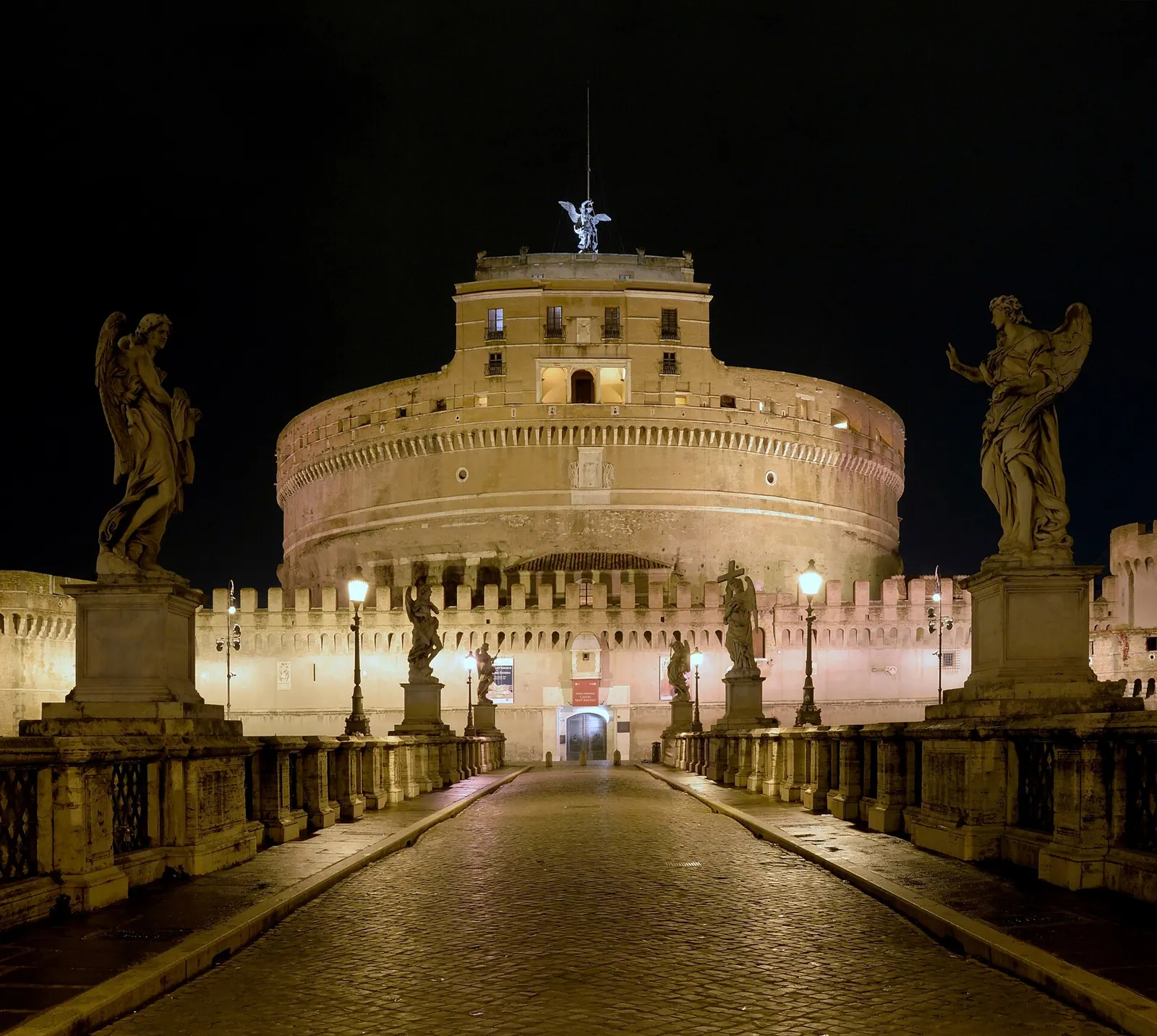
Hadrian had it built as his mausoleum, finished in AD 139. It later became a fortress, a prison and a refuge for the popes, who could reach it from the Vatican along the Passetto, a raised corridor of about 800 metres. Its name comes from an angel said to have appeared on top to announce the end of a plague.
Inside, a Roman spiral ramp leads up to the papal apartments, with Renaissance frescoes, and to the terrace of the bronze angel, the setting of the final scene of Tosca, overlooking the Tiber and St Peter's.
Nearby
Featured in these collections
About this listing
Checked on November 5, 2026.
Sources: Wikidata · OpenStreetMap · Google Maps (Place ID) · Ministero della Cultura