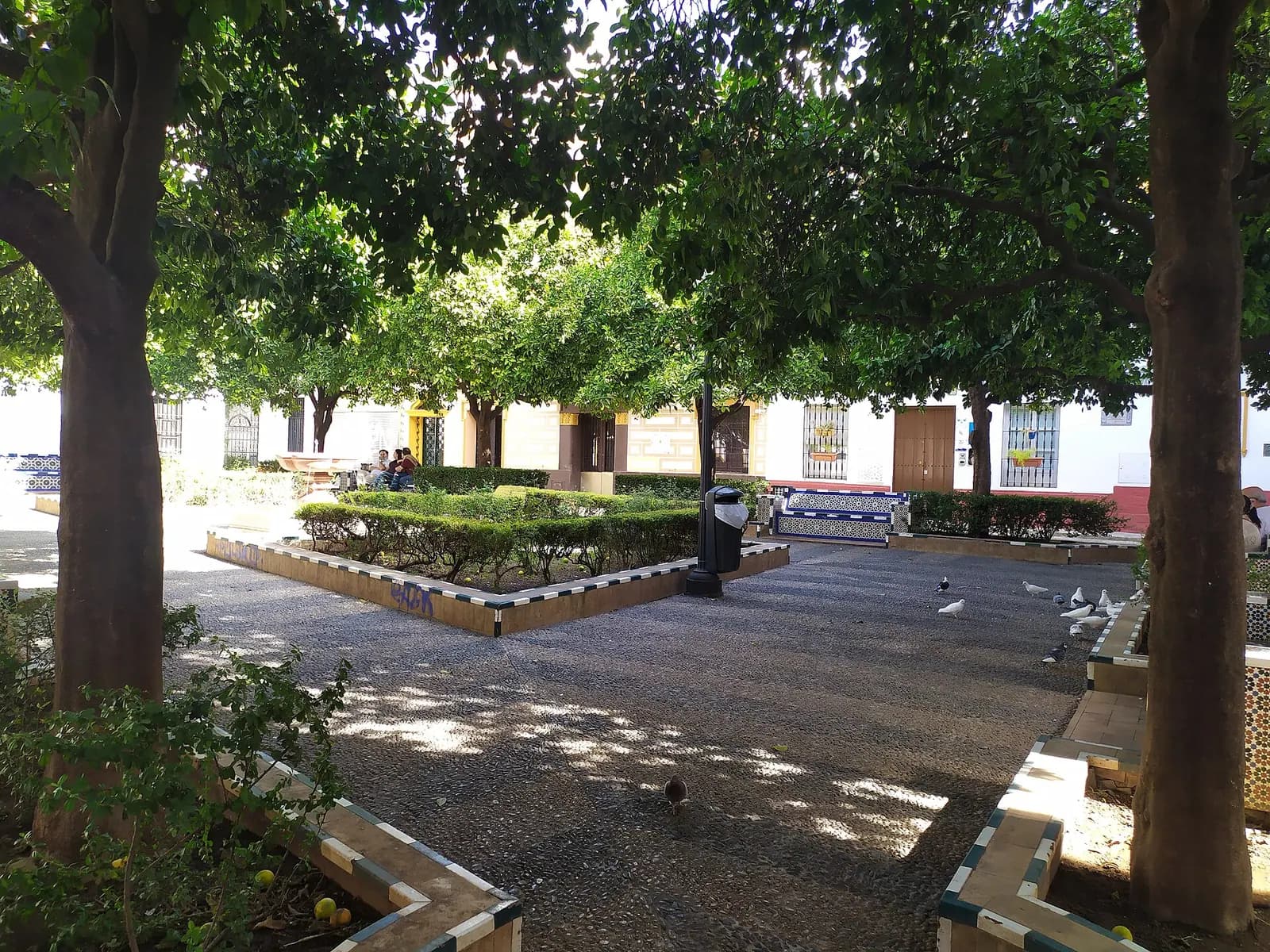
It was Seville's Jewish quarter until the attack of 1391, and its zigzag alleys date from then. Its present look, with iron grilles, flowerpots and white and yellow façades, owes much to a 1920s makeover for the 1929 Exposition.
Highlights are the Callejón del Agua, running along the Alcázar wall, Plaza de Doña Elvira with its orange trees, Plaza de Santa Cruz, where Murillo was buried, and Calle Susona, with the legend of the young Jewish woman whose skull hung over her door. The Hospital de los Venerables has paintings by Velázquez and Murillo.
Nearby
Featured in these collections
About this listing
Checked on November 5, 2026.
Sources: Wikidata · OpenStreetMap · Google Maps (Place ID) · Visita Sevilla